
PHOTOGRAPHY PROJECT
Theme for Year 26-27
1. Introduction
Did you know that India is home to thousands of different plants and animals? From mountains to beaches, every place (even your city) is full of hidden nature.
Look around you. The birds on your balcony, the trees on your street, the insects in your garden… they are all part of your city’s natural world. In every city, there are native species – plants and animals that naturally belong there and have grown in that environment over time. No matter where you live – Mumbai, Delhi, Pune, Ahmedabad, or anywhere else – these native species are all around you, waiting to be noticed.
In Nature’s Palette, you will become a nature explorer! Step outside, observe carefully, and use your camera to capture the native plants and animals around you. Your photographs will tell the story of nature in your own city.
2. Project Theme
“Nature’s Palette: Capturing the Biodiversity of Our City”
In this project you will:
- Explore your city and photograph native plants and animals
- Use your photos to tell a story about the species
- Prove that you took the photo by including yourself in it (shadow, reflection, etc.)
- Think about why this plan or animal is important in the ecosystem. What role does it play?
- Notice how your city’s surroundings (like weather, land, and people) affect its natural life
3. Your First Step: Know Your City’s Biodiversity
Before you begin photographing, research your own city. Every city in India has its own unique set of native species shaped by:
- Climate: tropical, semi-arid, humid, dry, or cold
- Geography: coastal, river plains, plateau, hills, or forest edges
- Water Bodies: rivers, lakes, ponds, wetlands, or the sea
- Green Spaces: national parks, sanctuaries, urban forests, or botanical gardens
Ask yourself these starter questions about your city:
| Question | Purpose |
|---|---|
| What are the most common birds I see every day near my home or school? | Identifying everyday native birds |
| What trees line the streets or grow in my local park? | Identifying native street and park trees |
| Is my city near a river, lake, coast, or forest? | Understanding water-linked biodiversity |
| Are there any national parks, wildlife sanctuaries, or bird sanctuaries near my city? | Identifying biodiversity hotspots |
| What native flowers bloom during each season in my city? | Understanding seasonal biodiversity |
4. Guiding Questions for Research and Reflection
Before AND after your photographs are taken / finalised research the following questions. These will help you build a meaningful narrative around your photographs:
| # | Question | Focus Area |
|---|---|---|
| 1 | How did this native species come to thrive in your city? What does it tell us about your local environment? | Emergence |
| 2 | Is this species connected to any traditional or cultural practices in your region or state? | Tradition & Culture |
| 3 | How have your city’s geography, climate, rivers, or forests shaped the presence of this species? | Local Influences |
| 4 | Who are the local advocates or organisations in your city working to protect this species? | People & Conservation |
| 5 | What does this species represent for your city’s community and identity? | Cultural Significance |
| 6 | How is urban expansion, pollution or development affecting this species in your city? | Social & Environmental Impact |
| 7 | What artistic elements (colour, texture, light, movement, pattern) can you capture in your photograph? | Artistic Expression |
5. Photography Guidelines
5.1 What to Photograph
Participants may choose from the following categories based on what is available in their city:
- Native Birds in flight, perched, feeding, nesting or calling
- Native Flowers & Plants – close-ups, in natural light, with natural surroundings
- Native Trees – full tree, bark textures, leaves, roots, canopy
- Native Insects – butterflies, dragonflies, bees, beetles in their natural habitat
- Coastal, River & Aquatic Life at beaches, lakes, rivers, ponds, wetlands, or mangroves
- Native Reptiles & Small Wildlife – lizards, frogs, snakes (safely from a distance)
- Grasslands & Open Fields – native grasses, wildflowers, and field species
5.2 Authenticity Requirement (Mandatory for All Participants)
Every photograph submitted must include proof of authenticity. This means the photographer must demonstrate that they personally captured the image. Downloaded or internet images will NOT be accepted.
Acceptable authenticity elements include:
| Method | Description | Example |
|---|---|---|
| Shadow in Frame | Photographer’s shadow falls into the shot | Shadow on ground while photographing a butterfly |
| Reflection | Photographer visible in a reflective surface | Reflection in a pond, puddle, or glass while photographing a bird |
| Hand or Arm in Frame | Hand gently near the subject | Hand pointing toward a flower or tree trunk |
| Silhouette | Photographer’s silhouette in the background | Standing near a tree at sunrise or sunset |
| Camera Strap or Equipment | Part of the camera, strap, bag, or tripod visible | Camera strap hanging in the |
| Behind-the-Scenes Shot | A companion clicks a photo of the photographer taking the shot | Wide shot showing the photographer in the field |
Note: Downloaded or internet images will not be accepted. Every photograph must be original and taken personally by the participant.
5.3 Documenting Your Findings
For each photograph submitted, write a short caption that includes:
- Title of the photo
- Species Name (Common name + Scientific name if known)
- Location (Where in your city was this taken?)
- Date & Time of photograph
- Shot on
- Description of the photo
- 2 interesting facts about the species related to culture, folklore, significance in the ecosystem. These have to be INTERESTING. Do not go to Wikipedia and copy the first fact you find.
- Citations of the facts that are valid and reliable
- Personal Reflection: What did you feel or learn while capturing this moment?
- Filter used if any.
See the examples given below.
Exemplar 1: Native Bird Photography
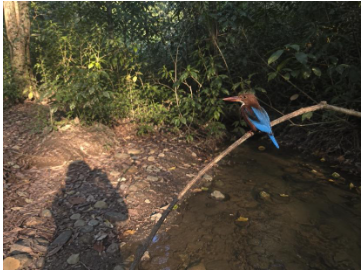
Title: “The Kingfisher’s Watch”
Species: White-throated Kingfisher (Halcyon smyrnensis)
Location: Aarey Forest, Mumbai
Date and Time: May 5th 2026, 7:00 am
Shot on: iPhone 16
Description of the photo: A White-throated Kingfisher is perched on a thin branch above a small stream in Aarey Forest. The photographer’s shadow is clearly visible on the ground below, stretching into the lower left corner of the image. The bird’s vivid turquoise wings and chestnut chest are captured in sharp focus against a soft, blurred green background. Morning light creates a golden rim around the bird.
Interesting Facts:
- Ecosystem Role: The White-throated Kingfisher is a powerful hunter that eats insects, frogs, lizards, fish, and even small rodents. By feeding on many different animals, it helps keep their populations under control and maintains balance in the ecosystem.
Reference:
-
-
- Bombay Natural History Society (BNHS) – species descriptions and field guides
- BirdLife International – species factsheet on White-throated Kingfisher
-
- Cultural Belief: In many parts of India, especially near coastal and river communities, kingfishers are seen as signs of clean water and healthy surroundings. Fisherfolk often associate their presence with good fishing areas because the birds are usually found where there is plenty of prey.
Reference:
-
-
- Bombay Natural History Society (BNHS) – field observations and ecological notes on bird–habitat relationships
-
Caption by Photographer: I stood very still for almost ten minutes before this Kingfisher settled on this branch. My shadow tells you I was truly there, watching and waiting. Seeing it up close made me realise how much wild life still exists in our city.
Filter used: None
Exemplar 2: Native Flower Photography
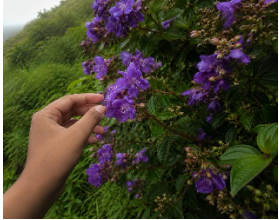
Title: “The Karvi Bloom”
Species: Karvi (Strobilanthes callosa)
Location: Sanjay Gandhi National Park, Mumbai
Date and Time: August 29th 2026, 9:10 am
Shot on: Acuvar 16MP Digital SLR Camera
Description of the photo: A dense cluster of purple Karvi flowers fills the frame. The photographer’s hand is gently extended toward the blooms, just touching the edge of a petal – not picking or disturbing the flower, but acknowledging their presence at this rare event. The background is a lush monsoon green.
Interesting Facts:
- Cultural / Local Significance: In parts of Maharashtra, the blooming of Karvi every 7–8 years is seen as a special natural event, and many people visit places like forests and hills to witness it. For local communities, it is a moment of pride and connection to their landscape.
Reference:
-
-
- Bombay Natural History Society (BNHS) – documentation of mass flowering events in the Western Ghats
- Maharashtra Forest Department – reports and public awareness around Karvi blooms
-
- Ecosystem and Traditional Knowledge: After Karvi blooms, the large number of flowers attracts bees and other pollinators, supporting honey production and local ecosystems. In some areas, people also recognise the bloom as part of traditional seasonal cycles in the Western Ghats.
Reference:
-
-
- Ashoka Trust for Research in Ecology and the Environment (ATREE) – studies on flowering cycles and pollinators
- Indian Institute of Science (IISc) – ecological research on mass flowering species
-
Caption by Photographer: Karvi blooms only once every seven years. I could not believe I was standing in front of it. My hand in the picture is my way of saying.’ I was here, I witnessed this miracle of nature.’
Filter used: UV Protection filter
Exemplar 3: Native Tree Photography
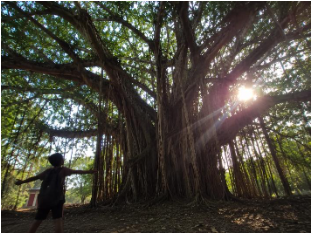
Title: “Roots of Mumbai”
Species: Banyan Tree (Ficus benghalensis)
Location: Shivaji Park, Dadar, Mumbai
Date and Time: August 15th 2026, 3:00 pm
Shot on: Google Pixel 10 Pro XL
Description of the photo: A wide-angle shot of a massive, ancient Banyan tree. The photographer stands at the base, dwarfed by the enormous aerial roots and canopy. Their silhouette is visible at the left side of the frame, arms outstretched as if embracing the tree. Sunlight filters through the canopy, creating dramatic rays of light.
Interesting Facts:
- Cultural Significance in India: The Banyan tree is considered sacred in India and is often planted near temples. It is associated with long life and wisdom, and in some traditions, people worship it during festivals like Vat Savitri.
Reference:
-
-
- Ministry of Environment, Forest and Climate Change – cultural and ecological importance of native trees
- Forest Research Institute – documentation on traditional uses and significance of banyan
-
- Ecosystem Importance: A single Banyan tree can support hundreds of species of birds, insects, bats, and small animals by providing food (figs) and shelter. Because of this, it is often called a “keystone species” in its ecosystem.
Reference:
-
-
- Centre for Ecological Sciences, Indian Institute of Science – studies on fig trees and biodiversity
- Bombay Natural History Society – field observations on banyan ecosystems
-
Caption by Photographer: This Banyan tree is older than most buildings around it. Standing next to it made me feel how small I am and how important it is to protect trees like this one.
Filter used: Vivid
Exemplar 4: Coastal Life Photography
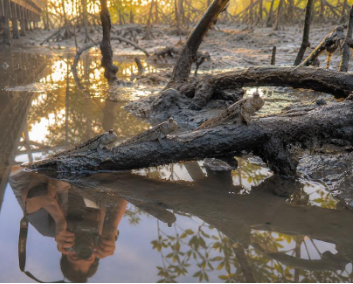
Title: “Mudskipper Morning”
Species: Mudskipper (Periophthalmus species)
Location: Versova Mangroves, Mumbai
Date and Time: November 1st 2026, 6:18 am
Shot on: Google Pixel 10 Pro XL
Description of the photo: Three mudskippers are perched on exposed mangrove roots in shallow muddy water. The photographer is crouching at the edge of the mangrove boardwalk. Their camera, strap, and partial reflection are visible in the still water below. Early morning golden light reflects off the mud.
Interesting Facts:
- Unique Adaptation: Mudskippers can breathe air through their skin and the lining of their mouth, which allows them to survive on land for long periods. They must stay moist, which is why they live in muddy mangrove areas.
Reference:
-
-
- National Geographic Society – explains mudskipper amphibious breathing and behaviour
- Smithsonian National Museum of Natural History – research on mudskipper adaptations
-
- Mudskippers play an important role in mangrove ecosystems by feeding on insects and small organisms in the mud and by digging burrows, which helps aerate the soil and support other life.
Reference:
-
-
- Food and Agriculture Organization – mangrove ecosystem functions and species roles
- International Union for Conservation of Nature – mangrove biodiversity and species interactions
-
Caption by Photographer: Mudskippers are fish that have evolved to breathe air and walk on land. I never knew they existed in Mumbai until I visited Versova. My reflection in the water is proof I was right there at dawn.
Filter used: None
Exemplar 5: Butterfly & Insect Photography
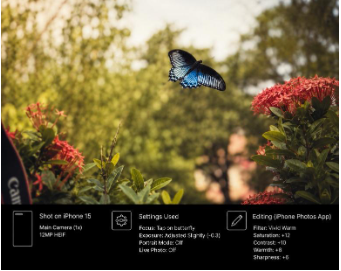
Title: “Blue Mormon in Flight”
Species: Blue Mormon Butterfly (Papilio polymnestor)
Location: Maharashtra Nature Park, Dharavi, Mumbai
Date and Time: August 1st 2026, 4 pm
Shot on: Google Pixel 10 Pro XL
Description of the photo: A stunning Blue Mormon butterfly is captured mid-flight between two flowering shrubs. The photographer’s camera bag strap hangs visibly from the left corner, signifying their presence. The butterfly’s iridescent blue wings are sharp against a blurred green background.
Interesting Facts:
- Regional Significance: The Blue Mormon is Maharashtra’s state butterfly because it is commonly found here and represents the state’s rich biodiversity. It was chosen to spread awareness about protecting butterflies and nature.
Reference:
-
-
- Government of Maharashtra – declaration of state symbols
- Bombay Natural History Society – information on butterfly diversity and conservation
-
- Adaptation and Survival: The caterpillars of the Blue Mormon often look like bird droppings, which helps protect them from predators. This clever disguise is a survival strategy called camouflage.
Reference:
-
-
- National Centre for Biological Sciences – butterfly life cycles and adaptations
- Indian Institute of Science – studies on insect camouflage and evolution
-
Caption by Photographer: The Blue Mormon is Maharashtra’s State Butterfly and I found it right here in the city. I waited for it to fly just right and captured this shot. My bag strap in the corner is my signature – I was there.
7. Submission Checklist
Before submitting your photographs, ensure you have completed the following:
- Photograph is original and taken personally by the participant
- Photograph includes an authenticity element (shadow, reflection, hand, silhouette, equipment, or behind-the-scenes shot)
- Subject is a native species of your city from the reference guide
- A written caption is attached to each photograph
- Caption includes species name, location, date, and personal reflection
- Research is supported by some valid source