
Lesson Plan 12
Unpacking feedback on phase 2 + Finalizing data collection plan
- Objective:
Incorporating the feedback received and finalizing how students will collect the data for the RQ.
- Resources (Teacher):
- Printed or digital copies of students’ submitted work with CaL feedback
- Copies of the “methods” section of the rubric.
- Resources (Students):
- CaL Note Book
- Pencil/Pen
- Blackboard + Chalk
- Time: 45 min
- Plan:
TEACHERS PLEASE NOTE: Once you receive feedback from City as Lab, there can be two scenarios.
Scenario 1: Their submission is accepted without any changes in which case “Congratulations!” you are done with phase 2!
Scenario 2: The more likely scenario is that the CAL team has provided feedback to the students to fortify their RQ, Rationale and Hypothesis before moving to Phase 3.
This lesson will help you help your students unpack and make sense of the feedback provided by CaL and make necessary revisions.
Prep Needed by the Teacher:
- Review the feedback provided by the CaL team for every submission so that you understand it. Clarify any doubts you have with the CaL team before you meet your students.
Review the “methods” section of the CaL Rubric.
Step 1. Group-work- Review (10-15 min): Distribute digital or printed copies of students’ submissions with the feedback from CaL to every group.Give students 10 min to review the feedback and discuss the following questions in their groups. Walk around to clarify any doubts they may have.
- What are the major changes we need to make?
- What are the minor changes we need to make?
- What do we NOT need to change at all?
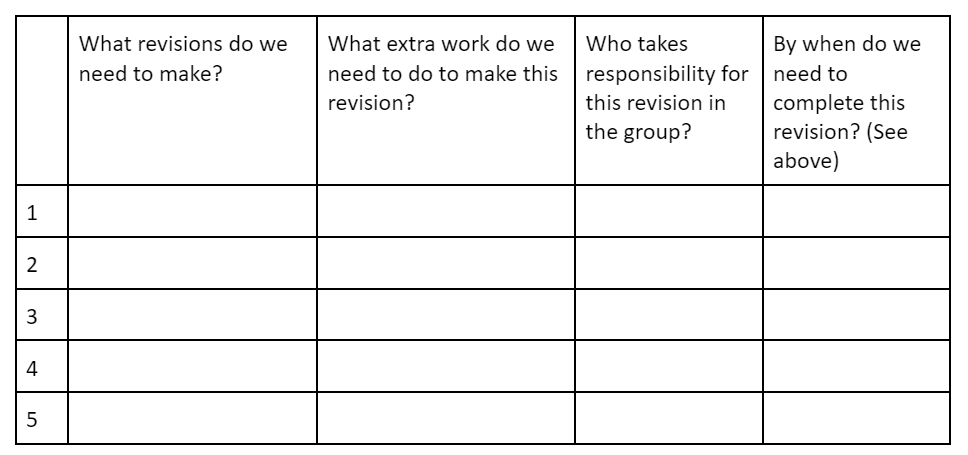
Step 2. Finalise data collection plan (30 min)
TEACHERS PLEASE NOTE:
Some examples of the kind of feedback students may receive and action steps they may plan:
- A data collection method/s which is not well suited & sufficient to answer the RQ in a reliable manner.
- RQ and data collection methods are not aligned. For example RQ: Do petrol, diesel and CNG prices differ across pumps in the city. Method: Survey people at a petrol pump on whether they use petrol, diesel or CNG. These two are NOT aligned
- The number of survey questions, alignment of survey questions to the RQ & hypothesis, adequate sample size, types of observations, relevance of interview questions, etc. are all not designed thoughtfully.